
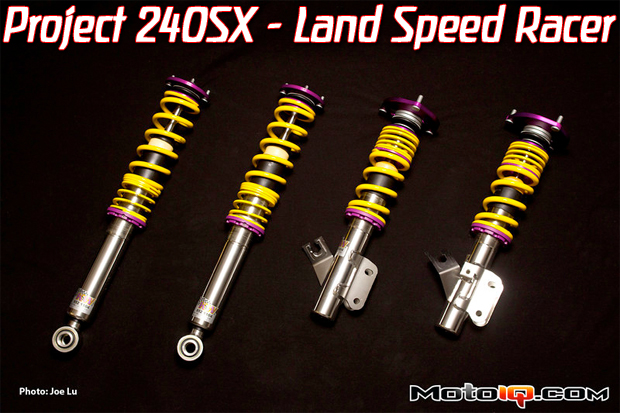
If racing wasn't already hard enough on a racecar and all of its components, replace the well-manicured tarmac of a road course with a few hundred tons of salt and then racing becomes even more brutal. Salt is hygroscopic, meaning that it attracts water. To make things worse, salt increases water's ability to carry electrons, which promotes oxidation or "rust" that can wreak havoc on a racecar. Combine the oxidation threat with the dirt and rocks of the El Mirage lakebed, and then things can get really nasty. To accomplish our 200 MPH goal, we need a suspension system that can confidently dampen the imperfections of a blemished, dirt and salt covered racetrack. On top of that though, we also need a suspension system that can endure the hostile environments that come with land speed racing.
Read the entire article at Moto IQ